The Onggi Trilogy: Part Two
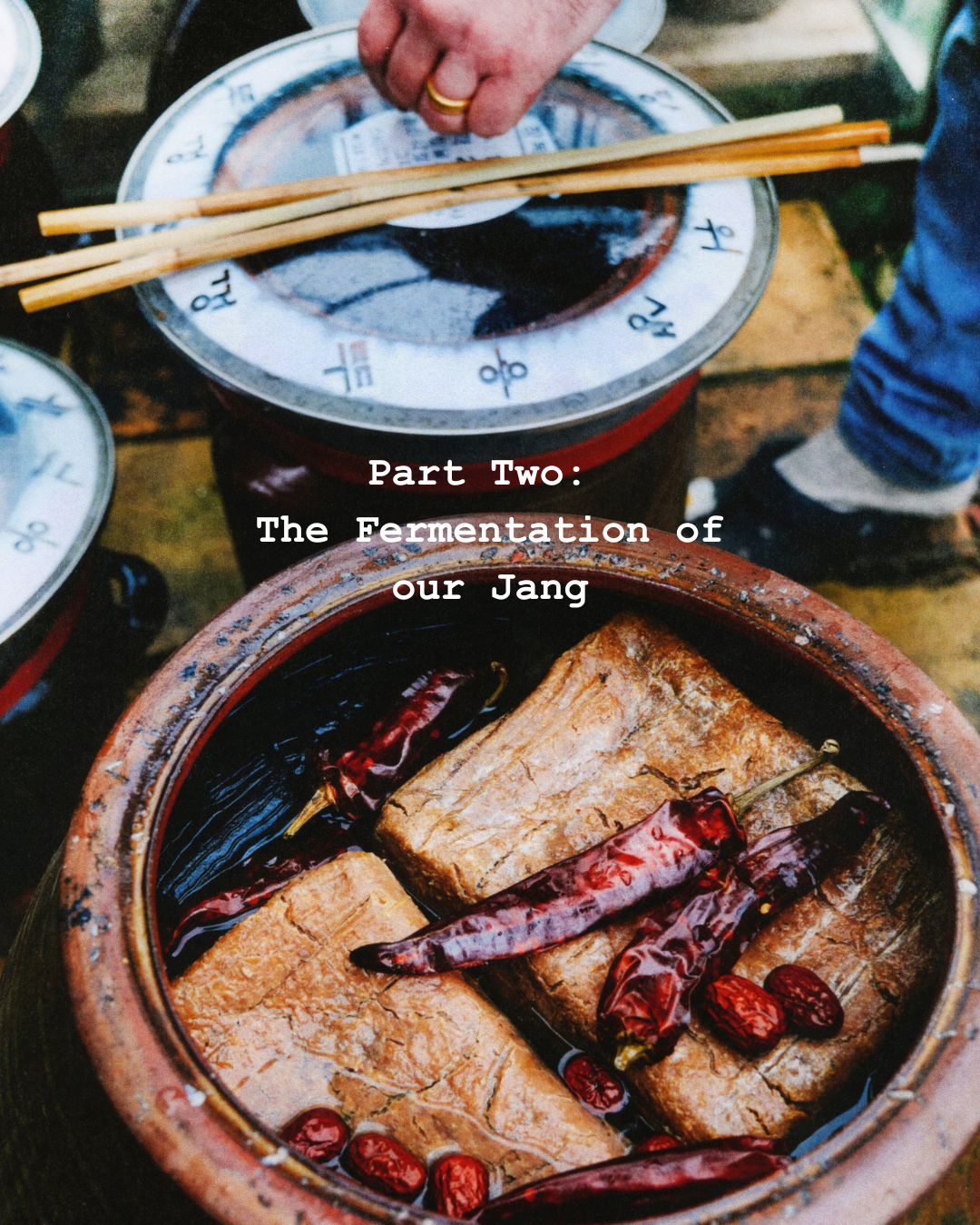
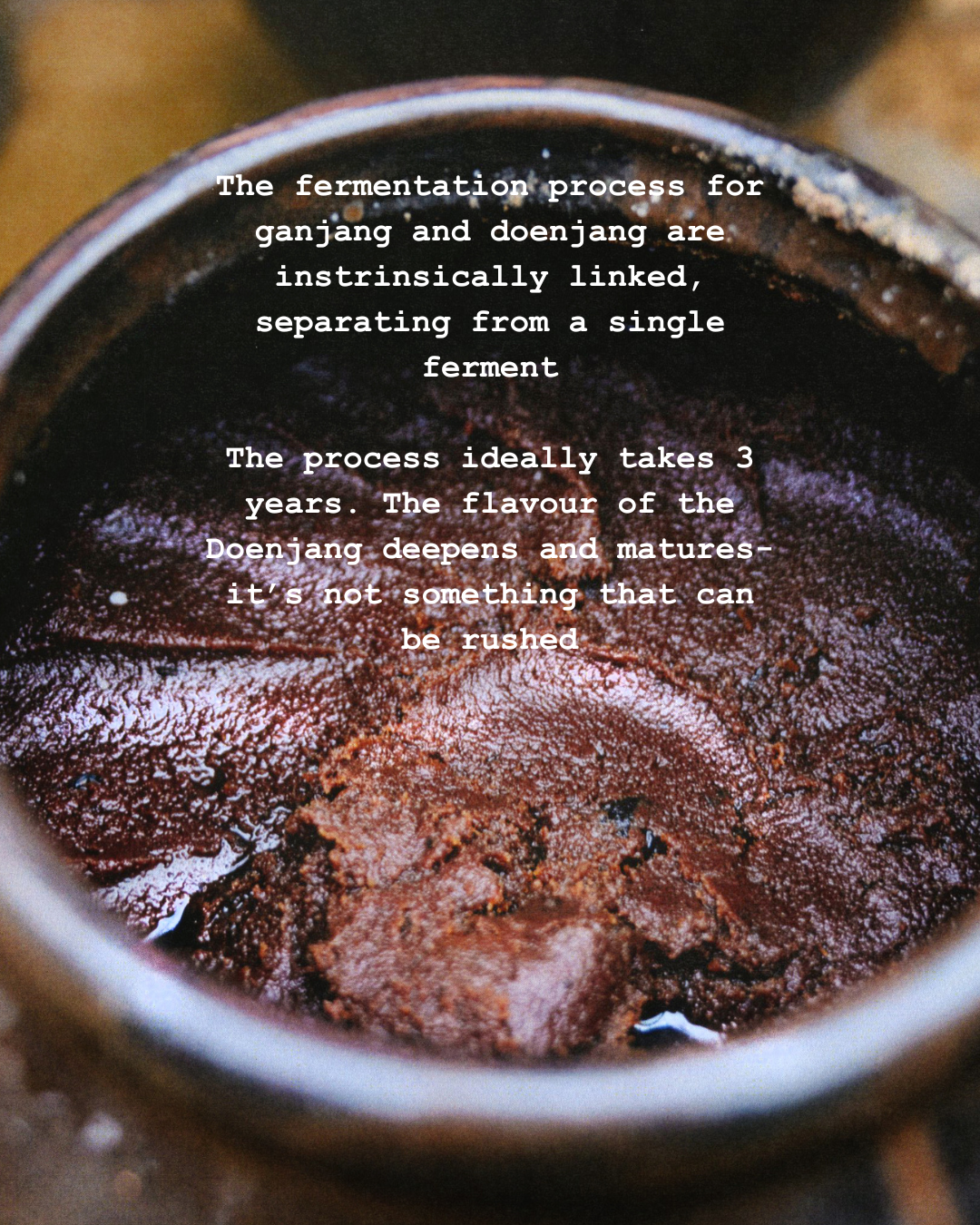
The starting point for doenjang, ganjang and gochujang are fermented soybeans (or rather meju). The brined meju bricks when separated become doenjang (the solids) and ganjang (the soy infused brine), whereas meju powder is the catalyst for the fermentation of malted rice and chili powder which is gochujang.
Therefore all three Jang are inextricably linked and known as the foundation of Korean cuisine. Together they reflect the different ways Koreans have traditionally used soybeans, salt, chilli and time to create flavour.
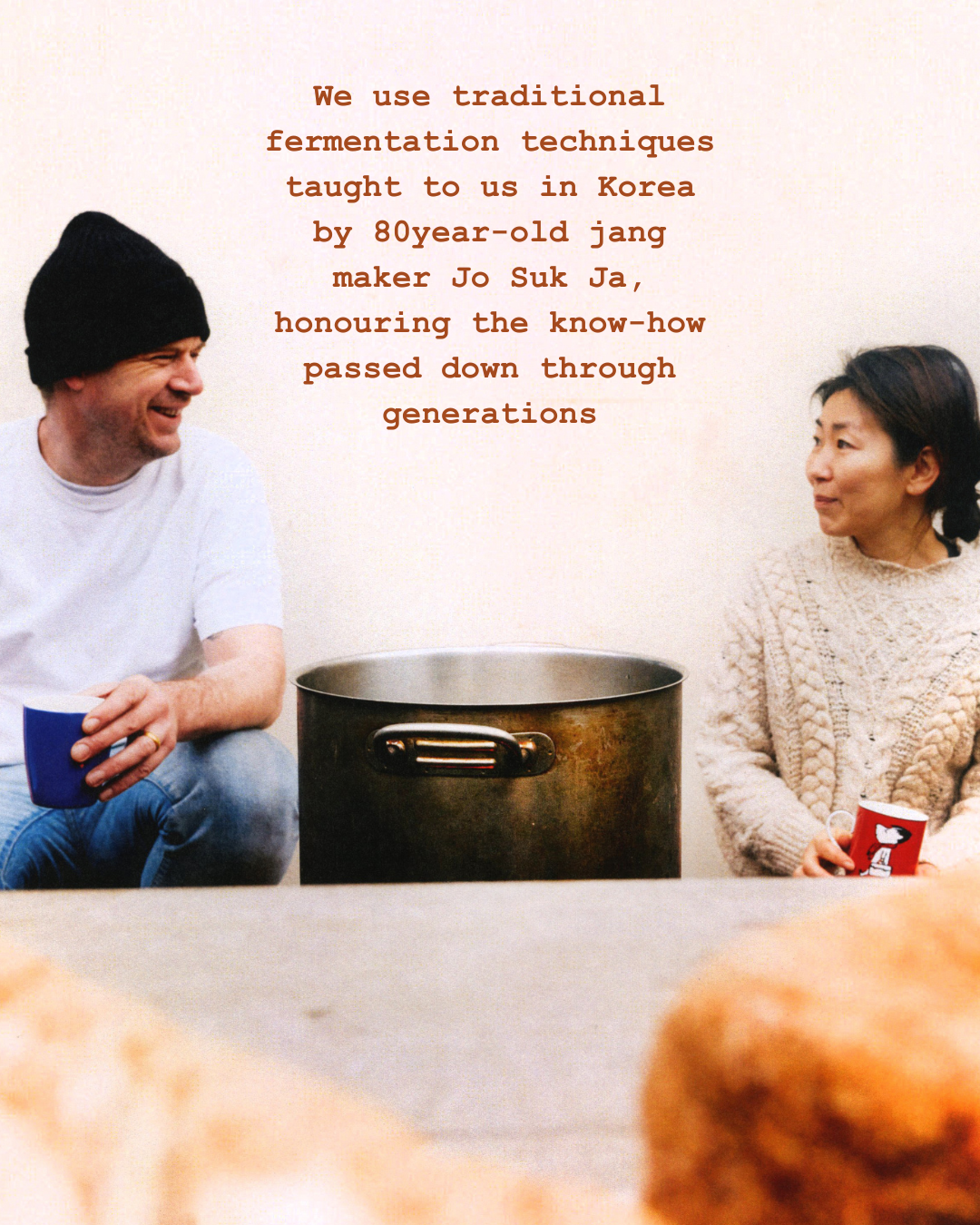
We use traditional fermentation techniques taught to us in Seoul by 80-year-old female jang maker Jo Suk Ja. She showed us the importance of each stage, from cleaning and cooking the soy beans, to controlling the fermentation to prevent spoilage. The distinctive form of Onggi allows for the distribution of pressure throughout the fermentation process and we have learnt to monitor this while also allowing time, the very different weather and ambient conditions in the UK to play their part.
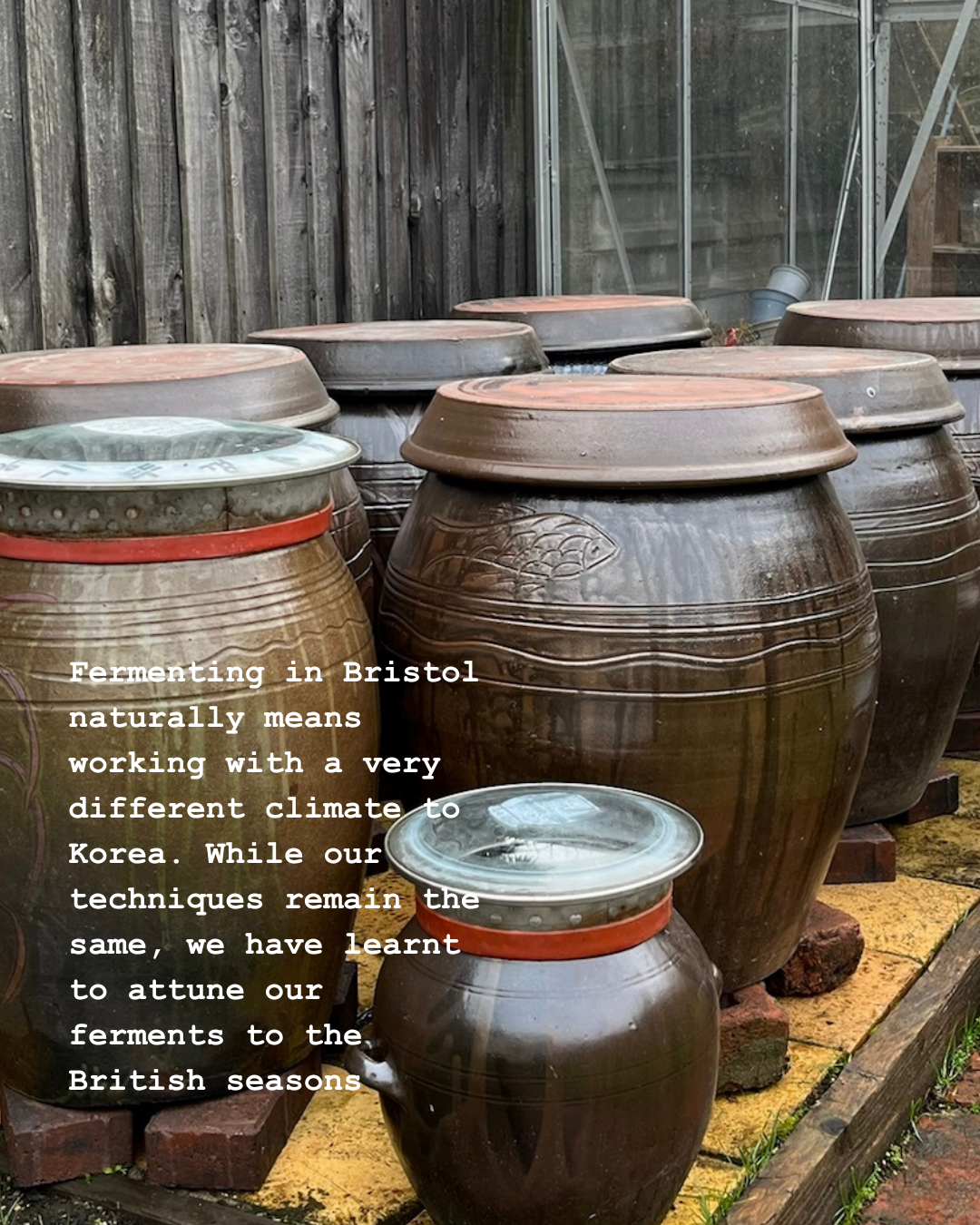
Fermenting in Bristol naturally means working with a very different climate to Korea. Our techniques and the role of the Onggi remains the same, but Bristol’s climate and British seasons also have an effect. Over the years, we have learnt how to work with these elements and to create ferments that are unique to us.
Next - how we use these Jang at Dongnae. The Onggi Trilogy: Part Three coming soon.
Photo Credits to James Pearson Howes